Dry Fire That Transfers: How to Practice Without Building Bad Habits
Dry Fire That Transfers:
How to Practice Without Building Bad Habits
Every great shooter practices dry fire.
That statement is not controversial. Competitive shooters, defensive pistol instructors, serious concealed carriers, and high-level marksmen all understand that skill is built through repetition. Live fire is important, but live fire alone is rarely enough. Ammunition is expensive. Range time is limited. Noise, recoil, heat, travel, and range restrictions can make it difficult to practice as often as a shooter should. Dry fire that transfers to live fire solves many of those problems. With dry fire, a shooter can work on stance, grip, sight alignment, sight picture, trigger control, follow-through, draw stroke, target transitions, movement, and reloads, without firing a live round. Done correctly, dry fire builds the foundation that later shows up on the range.But there is another side to the discussion.
Not all dry fire practice transfers equally well to live fire. Some forms of dry fire can even build bad habits. That matters because a habit is not just something you do once in a while. A habit is an automatic behavior. It is something your body may do before your conscious mind has time to stop it. Good habits can make you faster, smoother, safer, and more consistent. Bad habits can follow you onto the live-fire range. In the worst case, they can follow you into a real defensive emergency.There is another issue too.
Traditional dry fire can be valuable, but for many people, it is not very exciting. It can feel repetitive and it can feel mechanical. It can feel like homework. That matters because people practice more when practice is interesting and fun. A shooter who enjoys training is more likely to train. A shooter who sees feedback, hears the click, feels the gun recoil, watches a laser hit the target, and gets the satisfaction of running a clean drill is more likely to come back the next day and do it again. This is dry fire that transfers to live fire. That is where better dry-fire tools can make a major difference.The Value of Traditional Dry Fire
Traditional dry fire has tremendous value. If a shooter unloads the firearm, removes all live ammunition from the practice area, follows strict safety rules, and works carefully, dry fire can help develop some of the most important shooting skills. The shooter can press the trigger without the distraction of recoil. He can watch the sights or red dot and see whether the gun moves during the trigger press. He can practice a clean draw from concealment. Or, he can work on building a stable stance and consistent grip before the gun reaches eye level. And he can rehearse reloads, presentation, follow-through, and safe gun handling.These skills absolutely transfer to live fire.
The problem is that traditional dry fire has limitations. With many pistols, once the trigger is pressed, the shooter has to rack the slide before pressing the trigger again. That creates an interruption after every shot. There is no recoil. There is no slide movement caused by the shot. The muzzle doesn't rise. There is no realistic trigger reset. There is no visible indication of where the shot would have landed unless another tool is added. For slow, careful trigger-control work, that may be acceptable for some. But as an instructor, it isn't acceptable to me. For realistic defensive pistol practice, multiple-shot strings, follow-up shots, transitions, or recoil recovery, those limitations become more important. Traditional dry fire can also become boring. The shooter presses the trigger, racks the slide, presses the trigger again, and repeats the same artificial cycle over and over. Serious shooters may force themselves to do it anyway because they understand the value. But many everyday gun owners do not stay with it long enough to get the full benefit. The best training program is not just the one that works in theory. It is the one the student will actually do.The Bad Habit Problem
The biggest concern with traditional dry fire is not simply that it lacks recoil. The bigger concern is that it can teach the shooter to do something he should not be doing. If every dry-fire trigger press is followed by manually racking the slide, the shooter may begin building a bad habit from this pattern:Press the trigger. Rack the slide. Press the trigger. Rack the slide. Press the trigger. Rack the slide.
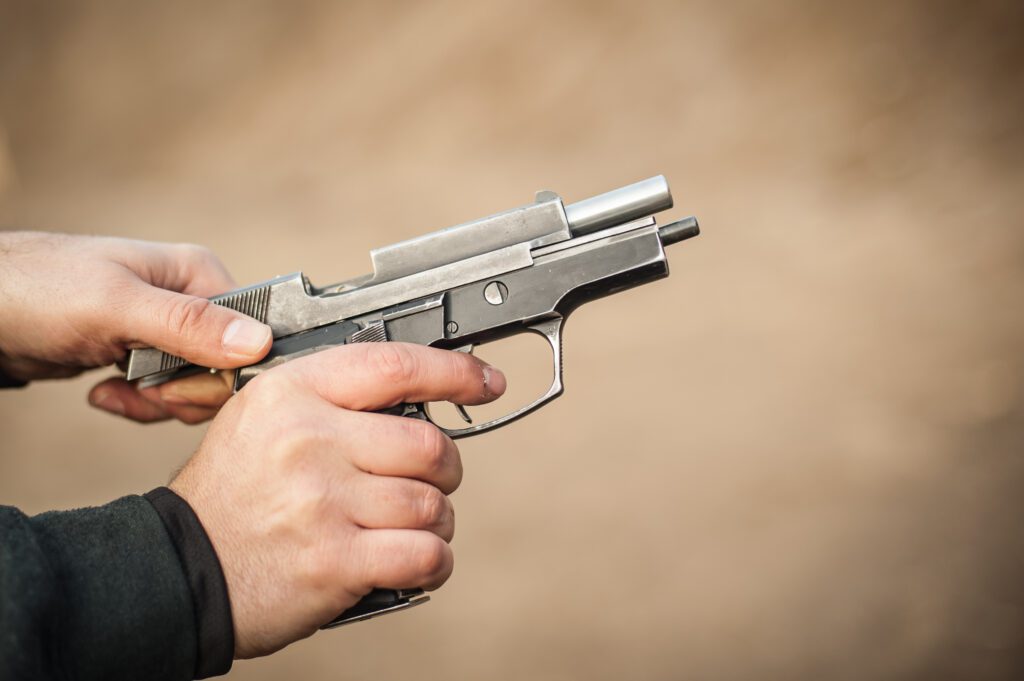 At first, that seems harmless. The shooter knows he is only doing it because the gun needs to be reset. But the body learns patterns. After enough repetitions, the support hand may want to move toward the slide automatically after every trigger press. That is a training scar. It is a behavior that is required for the dry-fire drill but not in live fire. During live fire, the pistol cycles itself. The shooter should be maintaining stance, grip, sight awareness, trigger discipline, recoil control, and follow-through. He should be recovering the sights and preparing for the next shot if another shot is necessary. He should not be coming off the gun to rack the slide after each round. That is why dry fire has to be done intelligently. Practice does not make perfect. Practice makes permanent. Perfect practice builds better skill. Poorly designed practice can build a problem.
Laser Dry Fire Is a Step Up
Adding a laser cartridge or laser training device is a useful improvement. Now the shooter gets visible feedback. Instead of simply hoping the sights were aligned when the trigger broke, the shooter can see where the laser appeared. That can make practice more engaging and more accountable. This is important. Feedback makes training more interesting. When a shooter sees the laser hit the target, the drill becomes more like a game and less like a chore. The shooter knows whether the shot would have been high, low, left, right, or centered. He can make corrections. He can measure improvement. And he can compete against his last run. That kind of feedback creates motivation. And it is the beginning of positive dry fire that transfers to live fire. A laser can help indicate trigger movement. It can help with target transitions. It can help a shooter see whether the gun is moving before, during, or after the trigger press. And it can also work with target systems and apps that record hits.That is a meaningful step forward.
But laser-only dry fire still has limitations. In many pistols, the shooter still has to rack the slide after each trigger press. There is still no recoil impulse. There is still no real slide movement from the shot. And there is still no realistic recovery between shots. The shooter may get better visual feedback, but he may still be practicing an artificial cycle that does not translate well to live fire. That does not make laser dry fire bad. It simply means the shooter should understand what skill he is training. Laser dry fire is excellent for accountability, aiming, trigger control, presentation, and basic shot placement feedback. It makes dry fire more fun and much easier to stick with. But by itself, it does not fully solve the recoil, reset, and follow-up-shot problem.Why Recoil and Reset Matter
Live fire is different because the gun moves. When the shot breaks, the pistol recoils. The slide cycles. The sights lift and return. The trigger resets. The shooter has to maintain stance, grip pressure, visual focus, posture, and follow-through while the gun is moving. That is a major part of shooting well. A shooter who only practices without recoil may look good in dry fire but struggle when the gun actually fires. He may grip poorly. He may dip the muzzle. Maybe he will blink. or lose the sights. He may rush the second shot. Or, he may not understand what an acceptable sight picture looks like at speed.This is why dry fire and live fire should support each other.
Dry fire builds the movement pattern. Live fire verifies it. Dry fire lets the shooter get more repetitions. Live fire shows whether those repetitions are producing the desired result. The closer dry fire feels to live fire, the better the transfer can be. There is also a motivation factor. When the gun cycles, when the sights lift, when the laser shows the hit, and when the shooter can run more realistic strings of fire, practice becomes much more enjoyable. The shooter is no longer just clicking a trigger in an empty room. He is interacting with the target and seeing results. He is managing movement and building rhythm. That is when practice starts to feel alive. And when practice feels alive, people do more of it.Where CoolFire Trainer Fits
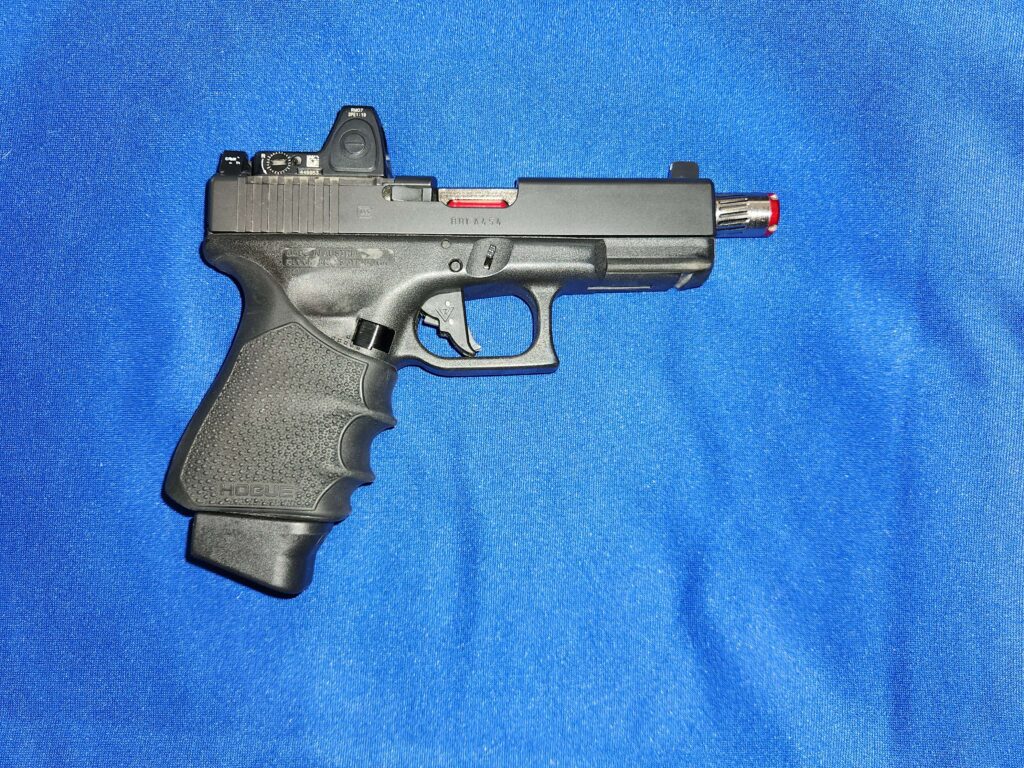 CoolFire Trainer addresses several of the major limitations of ordinary dry fire. According to CoolFire Trainer, its system transforms the shooter’s actual firearm into a CO₂-powered training tool that cycles the slide with every trigger pull, without using live ammunition. That matters because the shooter can practice in a rhythm that more closely resembles live fire. The grip stays on the gun. The support hand does not have to leave the pistol after every shot. The shooter can press the trigger, recover the sights, reset the trigger, and press again without building the habit of racking the slide after every trigger press. He can practice follow-through. He can practice multiple-shot strings. And he can work on recoil management in a dry-fire environment. And most importantly, he can use his own sights, own grip, own trigger, and own holster setup.
When a laser is added, the experience becomes even more useful and much more enjoyable.
CoolFire Trainer addresses several of the major limitations of ordinary dry fire. According to CoolFire Trainer, its system transforms the shooter’s actual firearm into a CO₂-powered training tool that cycles the slide with every trigger pull, without using live ammunition. That matters because the shooter can practice in a rhythm that more closely resembles live fire. The grip stays on the gun. The support hand does not have to leave the pistol after every shot. The shooter can press the trigger, recover the sights, reset the trigger, and press again without building the habit of racking the slide after every trigger press. He can practice follow-through. He can practice multiple-shot strings. And he can work on recoil management in a dry-fire environment. And most importantly, he can use his own sights, own grip, own trigger, and own holster setup.
When a laser is added, the experience becomes even more useful and much more enjoyable.
Now we have dry fire that transfers extremely well.
Now the shooter feels the gun cycle and sees where the shot would have gone. That combination changes the entire character of dry fire. It gives the shooter something to respond to and adds accountability. It adds challenge and satisfaction. For many students, that is the difference between “I know I should practice” and “I actually want to practice.” That is a major advantage. A recoil-enabled pistol with laser feedback can make dry fire feel less like a discipline assignment and more like an interactive training session. The shooter can run timed drills, draw from concealment, fire-controlled pairs, transition between targets, practice movement, and immediately see whether the hits were acceptable. That makes training more engaging. It also makes training more honest. When the stance is weak, the gun movement exposes it. If the grip is poor, the sights do not recover as cleanly. If the trigger press is rough, the laser shows it. When the shooter rushes, the target gives feedback. If the shooter improves, he sees that too. That feedback loop is powerful. It is also fun. And fun matters because fun creates repetition.Fun Is Not a Small Thing
Some instructors are hesitant to talk about fun because firearms training is serious. Safety is serious. Defensive pistol training is serious. The legal and moral responsibility of using a firearm is serious. But serious training does not have to be dull. In fact, enjoyable training can produce better commitment. A student who enjoys practice is more likely to practice consistently. A student who practices consistently is more likely to improve. When a student improves, he is more likely to stay motivated. That is why recoil-enabled dry fire with laser feedback can be so valuable. And why it transfers well to live fire.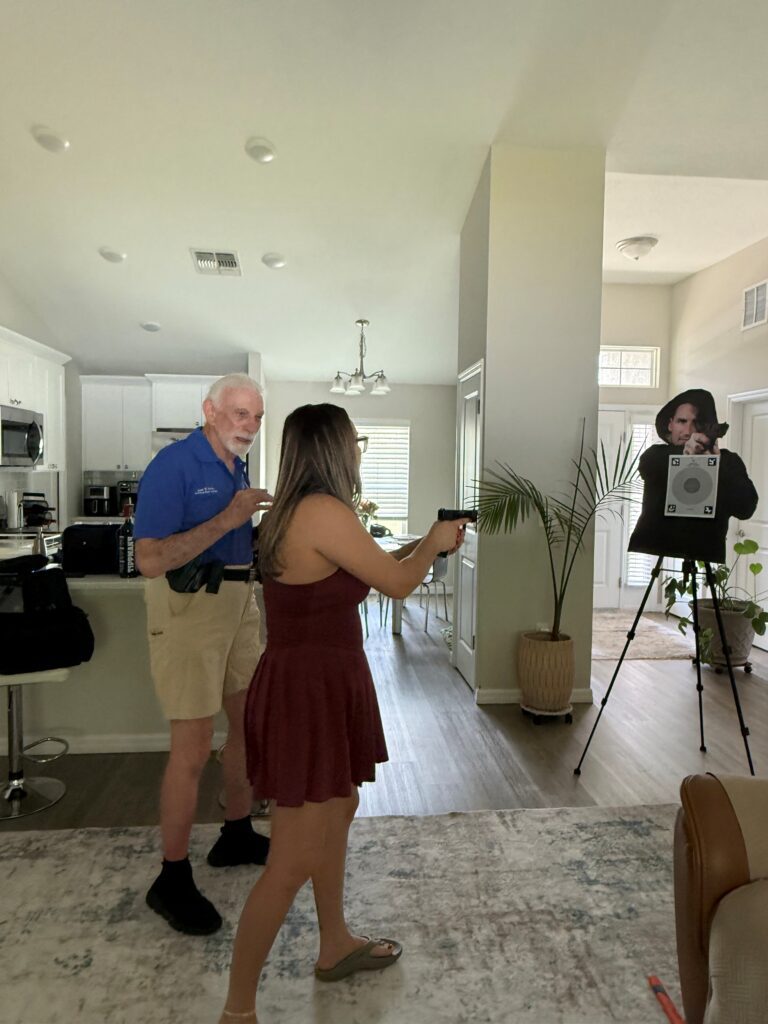
It gives the student a reason to keep going.
Instead of firing one dry shot and racking the slide, the shooter can work through a real sequence. Instead of wondering whether the shot would have been good, he can see it. He doesn't have to imagine recoil recovery, he can practice managing movement. Instead of waiting for the next range trip, he can get meaningful repetitions at home or in a controlled training environment. The training becomes active. It becomes measurable. It becomes satisfying. That can be especially important for newer shooters. A beginner may not yet have the discipline to perform hundreds of traditional dry-fire repetitions. But give that same student a safe, recoil-enabled pistol with laser feedback, and suddenly practice becomes something he wants to do. He wants to see the hit and beat his last time. He wants to tighten the group. And he wants to make the next run smoother. That desire to practice is what builds skill.Dry Fire Should Build the Right Automatic Behaviors
The real question is not whether dry fire works. It does. The better question is whether your dry fire is building the same habits you want to appear during live fire. These are the habits that you want to transfer well to live fire. A good dry-fire system should help the shooter keep both hands on the gun. It should support proper stance and grip. It should allow the shooter to work the trigger without unnecessary interruptions. And it should give feedback. It should make follow-through meaningful. It should help the shooter practice the same sequence he wants to use when firing live ammunition. A good dry fire system should also make practice interesting enough fun that the shooter actually wants to do it. That point should not be overlooked. Dry fire that is realistic, responsive, and enjoyable is much easier to sustain. The shooter gets more repetitions. More repetitions create more opportunities to correct mistakes. More correct repetitions create better habits. Better habits transfer more effectively to live fire. The more realistic the practice cycle, the more useful the repetitions become. Traditional dry fire has its place. Laser dry fire has its place. Live fire has its place. But when the goal is to bridge the gap between dry practice and live shooting, the training method matters.Dry fire is not just about clicking the trigger.
It is about programming the body to perform correctly when it matters. If the practice method builds clean habits, the transfer to live fire can be excellent. If the practice method builds artificial habits, the shooter may have to unlearn them later. And as everyone knows, it is really hard to break a bad habit. That is why serious shooters should look carefully at how they dry fire, not just how often they dry fire. Because every repetition teaches something. The only question is whether it is teaching the right thing. And if the training is realistic, responsive, and fun enough that the shooter wants to come back and practice again tomorrow, that may be one of the biggest advantages of all.About the Author