
Why A Dry Fire Training System With Recoil Bridges The Gap To Live Fire
Why A Dry Fire Training System With Recoil Bridges The Gap To Live Fire

A dry fire training system known as the CoolFire Trainer has earned a permanent place in serious firearms practice. Shooters can work on grip, presentation, trigger control, sight alignment, movement, and other important skills without ammunition or a trip to the range. Traditional dry fire, however, has several limitations. The handgun does not recoil. The slide does not cycle. In many semiautomatic pistols, the trigger does not automatically reset after each press. That means the shooter often has to rack the slide repeatedly just to continue practicing. That repeated slide-racking creates another problem that shooters do not always consider: we are practicing a movement that we do not want to perform after every shot during live fire. Training builds habits. Repeatedly racking the slide between trigger presses can condition an unnecessary movement into the training sequence, and that habit can potentially follow the shooter to the range. A dry fire training system that provides recoil, cycles the slide, and resets the trigger changes that experience considerably.
What Traditional Dry Fire Does Well
Traditional dry fire remains extremely valuable, and recoil-enabled training should not totally replace it. Shooters can perform hundreds of repetitions without spending money on ammunition. They can improve their grip, presentation, trigger control, sight alignment, reloads, movement, and familiarity with their firearm. Traditional dry fire works particularly well when the shooter wants to isolate one part of a skill and concentrate on performing it correctly. Its limitations become more apparent after the trigger press. During live fire, the handgun moves. The sights leave their original position, the slide cycles, and the trigger resets. The shooter has to maintain a proper grip, recover the sights, reacquire an acceptable sight picture, and decide when to fire another accurate shot. An unloaded handgun cannot reproduce that sequence by itself.
The Slide-Racking Problem In Standard Dry Fire
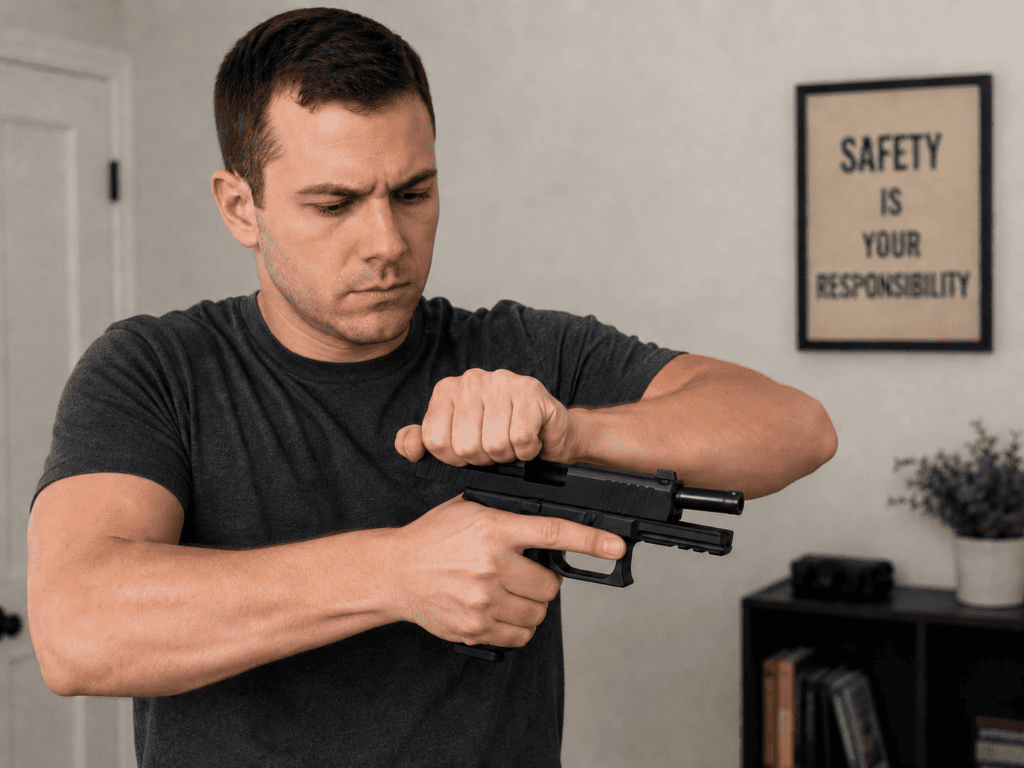 Anyone who has practiced extensively with a semiautomatic pistol knows the routine. Present the handgun. Press the trigger. Rack the slide. Present or reset. Press the trigger again. Rack the slide again. The shooter may repeat that process dozens or hundreds of times during a practice session. While the shooter needs to reset many conventional handgun triggers, repeatedly adding slide-racking to the sequence creates a training habit that has nothing to do with normal live-fire operation. I've seen experienced shooters who dry fire regularly, automatically reach to rack the slide during my monthly CCW Challenge competitions! When we train, we want our repetitions to resemble the actions we expect to perform with a loaded firearm. After firing a live round, we do not manually rack the slide before firing the next shot. The firearm cycles itself. A recoil-enabled dry fire training system allows the training sequence to operate much more naturally. The slide cycles, the trigger resets, and the shooter can concentrate on grip, sight recovery, trigger control, and the next accurate shot instead of manually resetting the firearm after every trigger press.
Why Recoil Changes The Training Experience
Recoil adds an element that standard dry fire simply cannot provide. With the CoolFire Trainer, the shooter converts his or her actual handgun into a CO₂-powered training platform. The system cycles the slide, produces felt recoil, and resets the trigger without using live ammunition. Now the shooter can work through a more complete shooting sequence. Instead of presenting the handgun and pressing the trigger once, the shooter can present, press the trigger, experience recoil, recover the sights, reset the trigger, and take another shot. That difference becomes increasingly important as training progresses beyond firing one deliberate shot at a stationary target.
My Experience With A Dry Fire Training System
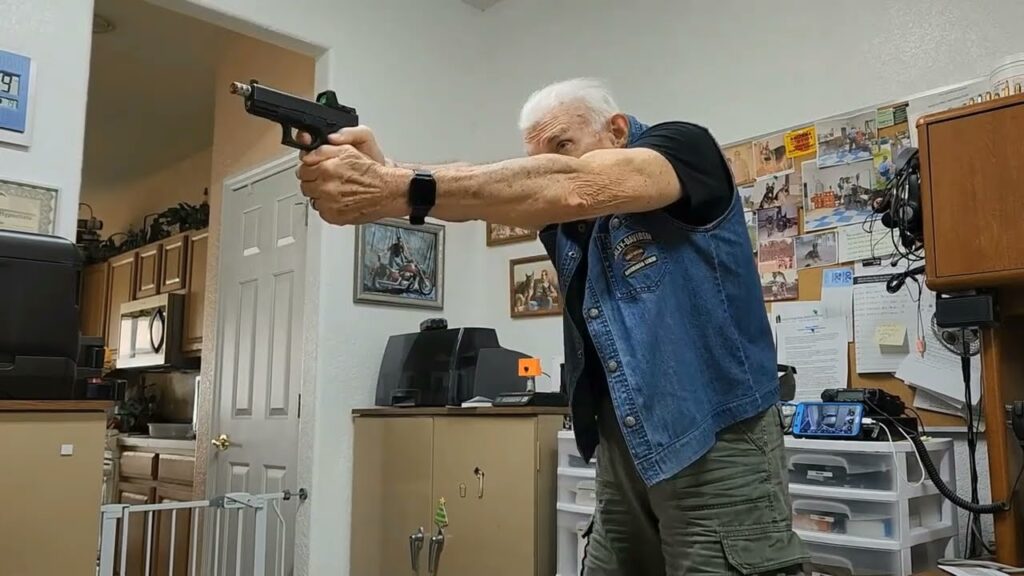 I have personally used the CoolFire Trainer for approximately seven years, possibly a little longer. I originally purchased it for my own training, years before I became a firearms instructor. I continue to use it for daily personal practice today. By the time I established CCW Training Academy in North Central Florida, I already knew from personal experience how valuable recoil-enabled dry fire could become for students. I was not aware of other instructors in my area offering this type of training, so I incorporated it into the training services I developed for my clients. It has worked extremely well. CoolFire has become an integral part of how I work with beginning shooters as well as more experienced students.
Beginning Shooters Appreciate The Difference
Beginning shooters already have a great deal to process. They may still be learning how to establish a proper grip, manipulate the trigger, align the sights, maintain muzzle awareness, and operate the handgun safely. Adding live ammunition, range noise, muzzle blast, stronger recoil, and the pressure of other shooters can make the learning process considerably more complicated. A dry fire training system with recoil gives us another step between an inert firearm and live ammunition. Students can learn how the handgun operates while experiencing slide movement, repeated trigger presses, sight movement, and moderate recoil in a controlled environment. New shooters tend to appreciate the experience very quickly. More importantly, they often enjoy it. That matters because students who enjoy training generally want to continue practicing. Instead of viewing repetition as tedious, they become engaged in what they are doing and begin trying to improve their performance.
Experienced Shooters Often Fall In Love With It
Experienced shooters usually recognize the possibilities almost immediately. Once they feel the slide cycle and realize that they can fire repeated shots without manually resetting the handgun, their reaction often changes from curiosity to enthusiasm. They begin thinking about everything they can practice. Faster presentations from concealment become possible. Shooters can work on sight recovery, multiple-shot sequences, target transitions, movement, and more complex defensive scenarios. Experienced shooters already understand what live fire feels like. Because of that experience, they can quickly recognize what recoil-enabled dry fire adds compared with conventional dry-fire practice. Many of them fall in love with the system almost immediately.
Learn The Scenario Before Adding Live Ammunition
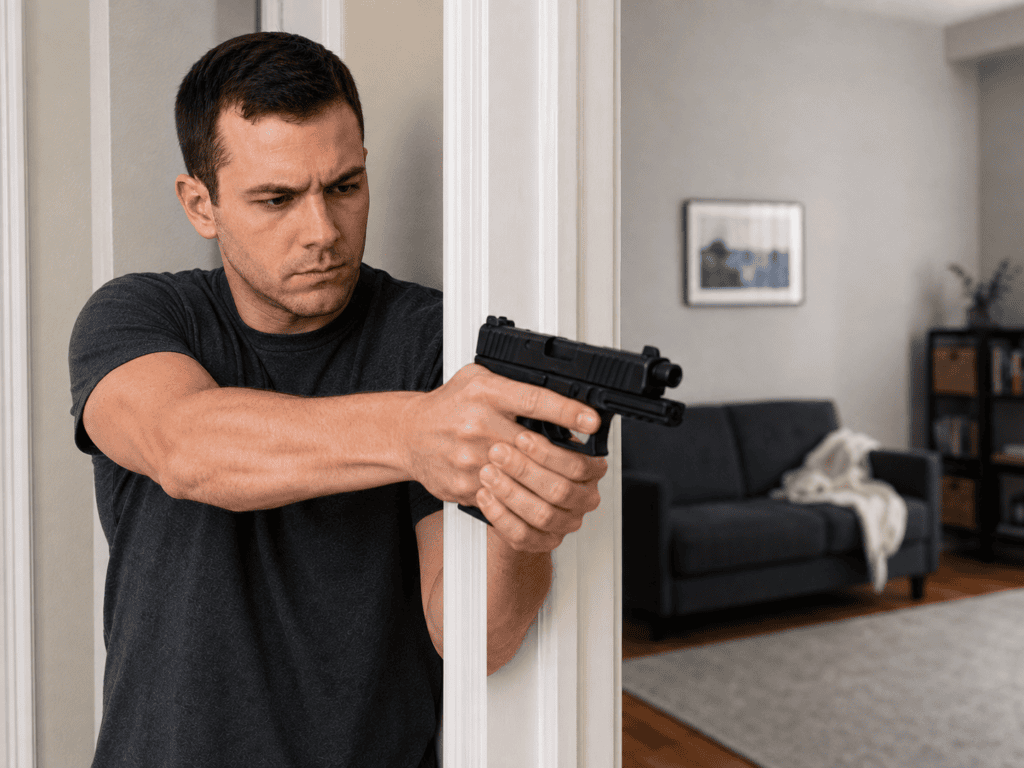 One of the greatest instructional advantages involves introducing new defensive scenarios safely. Consider a student learning to present a handgun rapidly from concealment while moving. I would much rather introduce that sequence without live ammunition. We can begin slowly. I can watch every movement, identify unsafe actions, correct positioning, and make sure the student understands exactly what they need to do. Speed comes later. Once the student performs the scenario correctly and safely, we can gradually increase the pace while still using the CoolFire Trainer. Only after the student demonstrates consistent, safe performance do we move that same scenario to live fire. The student does not arrive at the range and attempt the movement for the first time with a loaded handgun. Instead, live fire becomes the next stage of a skill the student already understands. One of the really nice things about the CoolFire Trainer is that it is compatible with many dry fire simulators that are on the market.
Why A Dry Fire Training System Helps Advanced Students
Advanced students gain a different set of benefits. As speed increases, small inefficiencies become easier to identify. Poor grip pressure affects sight recovery. An inefficient presentation wastes time. Unnecessary movement becomes obvious. Recoil provides immediate feedback. Students can see what happens to their sights after the shot and learn how quickly they can recover an acceptable sight picture. They can also perform multiple-shot sequences without inserting an artificial slide-racking movement between every trigger press. A quality dry fire training system therefore allows an instructor to develop more advanced skills while maintaining the controlled environment of non-live-ammunition training.
Training With Your Actual Handgun Matters
Another important advantage comes from using the handgun you actually own and carry. Grip dimensions remain the same. Your sights remain the same. The trigger, controls, holster fit, and general feel remain familiar. Those details matter for defensive pistol training. A separate training gun can provide value, but whenever possible, I prefer students to become intimately familiar with the firearm they may someday have to operate under stress. Recoil-enabled training with the student's own handgun helps maintain that continuity.
Does Recoil-Enabled Dry Fire Replace Live Fire?
No. Nor should it. Shooters still need live-fire training. Only live ammunition can demonstrate the actual recoil generated by a particular firearm and ammunition combination. Shooters also need live fire to verify accuracy, reliability, ammunition performance, and whether their training transfers successfully to the range. The better question is: What can a shooter learn safely and correctly before adding live ammunition? That question explains where recoil-enabled training provides so much value. Traditional dry fire develops one part of the skill. Recoil-enabled training adds another layer. Live fire then tests and develops the skill under actual firing conditions.
A Valuable Tool For Firearms Instructors
Individual shooters can obviously benefit from training at home, but I believe this technology represents one of the greatest opportunities for instructors. A firearms instructor can introduce new skills without requiring every repetition to consume ammunition or range time. Beginners can develop confidence and safe gun-handling habits before firing live ammunition. More experienced students can work on faster presentations, movement, sight recovery, multiple shots, and defensive scenarios in a controlled environment before transferring those skills to the live-fire range. The instructor also gains more opportunities to stop, correct, repeat, and refine a student's performance. By the time the student arrives at the range, valuable live-fire time can focus on confirming and developing skills rather than introducing every new movement from the beginning.
Bridging The Gap Between Dry Fire And Live Fire
I began using CoolFire long before I became a firearms instructor because I wanted a better way to train myself. Years later, that experience helped shape part of the training approach I use at CCW Training Academy in North Central Florida. Today, I see a dry fire training system with recoil as much more than a way to make traditional dry fire more entertaining. It eliminates the need to manually rack the slide after every trigger press. It allows shooters to experience recoil, trigger reset, and sight recovery. It lets instructors introduce movement and increasingly complex defensive scenarios before adding live ammunition. New shooters appreciate it. Experienced shooters usually fall in love with it. Most importantly, recoil-enabled dry fire creates a practical progression from learning a skill, to practicing that skill with realistic firearm operation, to finally proving it under live-fire conditions. That makes it a very effective bridge between traditional dry fire and the live-fire range.
About The Author
 Alan B. Densky is a former deputy sheriff and the founder of CCW Training Academy in North Central Florida. He is an NRA Certified Pistol Instructor, NRA Certified Nationwide CCW Instructor, NRA Certified Home Firearms Safety Instructor, and NRA Certified Range Safety Officer. Alan has personally used the CoolFire Trainer for approximately seven years and continues to use it for his own training as well as with beginning and advanced students. Recoil-enabled training has become an important part of how he helps students develop safe gun handling, faster presentations from concealment, movement, sight recovery, and defensive shooting skills before progressing to live fire.